 Let a handyman give you an estimate on your project


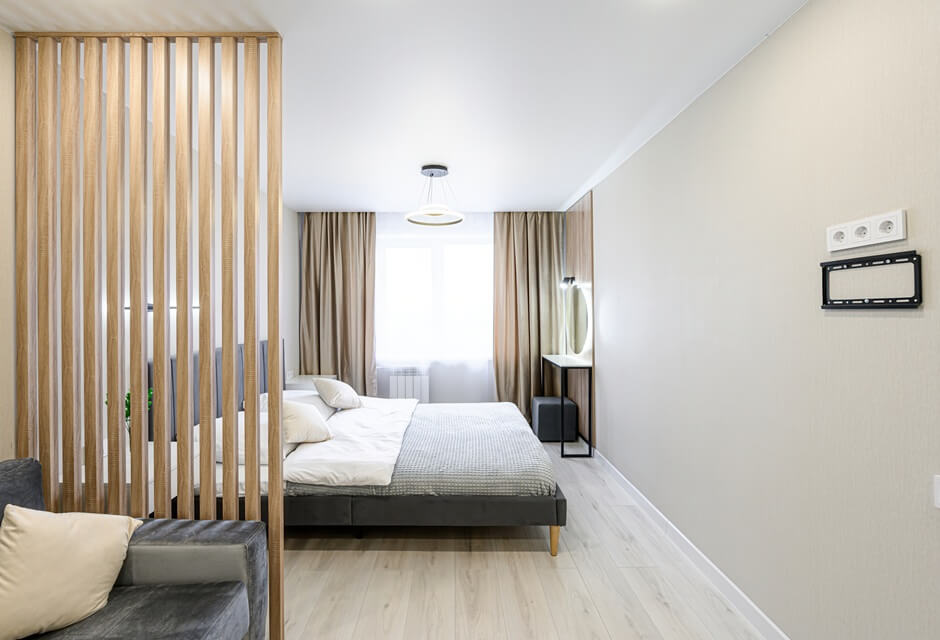
Creating separate spaces within a home can add function, privacy, and better use of square footage. If you would like to know how to divide a room with a wall to create home offices, nurseries, or guest areas without a complete remodel, partition walls offer a reliable and practical way to transform a large room into two distinct spaces.
From permanent installations to removable barriers, dividing a room does not have to be complicated. You can match the design to the existing layout, choose from different materials, and control the amount of light and sound between sections. Before starting your project, it helps to know the available options and what suits your goals best. So keep reading!
Permanent vs. Temporary Divider Walls
When deciding between a fixed or flexible solution, consider how long the new layout will be needed. Building a wall to divide a room makes the division feel permanent, especially when finished with drywall, insulation, and paint. This choice works well for long-term use or to create additional bedrooms or enclosed offices.
In contrast, those who want a non-invasive option can try dividing a room with a temporary wall. These walls do not require structural changes and are ideal for renters or seasonal needs. They can be removed later without much mess, making them a more flexible alternative.
Popular Room Divider Wall Options
From drywall to acrylic, there are many ways to divide a room, each with its own benefits. If you are looking to avoid major construction, consider these popular styles:
Drywall Partition
A traditional framed wall covered with drywall, typically constructed using wood or metal studs. Once installed, it's finished with joint compound and paint, giving it the appearance of a permanent wall.
It looks and feels like a standard interior wall and can be fully customized with doors, electrical outlets, or soundproofing. This is a popular option for creating more privacy or converting larger spaces into defined rooms.
Sliding Panels or Barn Doors
These are movable dividers that glide along a mounted track, either on the ceiling or wall. They can be made from wood, metal, frosted glass, or other materials, and often serve both decorative and functional purposes.
Sliding doors are ideal for areas where swinging doors take up too much space and are commonly used to separate home offices, closets, or transition zones in open layouts.
Bookshelves or Storage Walls
Provides a visual and physical separation while offering added function. You can use it to display holiday cards, artwork, plants, and other decor. This works best in studios or open floor plans.
They don't just block visual clutter; they let you showcase items like books, holiday cards, artwork, plants, or personal decor, adding personality and warmth to the space.
Temporary Pressurized Walls
These walls are non-permanent structures held in place using pressure, rather than nails or screws, making them renter-friendly. Often made from drywall or lightweight panels, they're ideal for dividing rooms in shared apartments or temporarily creating extra bedrooms or offices.
Glass or Acrylic Panels
Offers transparency while still separating the space. Good for dividing living and dining areas without blocking light.
Each option has different levels of privacy, cost, and design flexibility. Choosing the right style depends on your space, needs, and preferences.
How Much Does It Cost to Build a Wall to Divide a Room?
On average, a basic drywall partition may cost between $800 and $2,500, depending on size and finish. Adding electrical outlets, doors, or soundproofing increases the total. So the final answer will depend on materials, labor, and complexity.
Temporary walls can range from $150 to $1,000 depending on the type and installation method. Sliding or storage wall systems may have additional design or furniture costs. In all cases, measuring accurately and planning ahead helps avoid budget surprises.
How to Build a Divider Wall
Before construction begins, be sure to check local building codes and ensure that your structure will not interfere with HVAC, lighting, or electrical lines. Here is a general outline for building a simple divider wall:
- Measure and Mark the Layout: Mark the placement on the floor and ceiling using chalk lines or a laser level.
- Build the Wall Frame: Use 2x4s to frame the base, top plate, and studs. Secure the frame to existing walls, floor, and ceiling.
- Install Drywall or Panels: Attach drywall sheets or panels on both sides of the frame. Secure with screws and cut spaces for doors if needed.
- Tape, Mud, and Sand the Joints: Apply joint compound to seams and corners. Let dry and sand smooth.
- Prime and Paint: Finish with a coat of primer and paint to match the rest of the room.
Dividing a room is one of the best ways to make your home more functional without expanding your footprint; a custom wall can create a layout that works for your lifestyle. These steps can be done as a DIY project, or it can be a great reason to hire a handyman for a smoother, faster result.
Are you ready to turn one room into two? Wisercosts' handyman team can help with every step, from layout planning to installation to dividing a room with a wall. Contact us today to schedule a consultation and bring your new space to life!



 Member of the